
95%+
More than 95% of melanomas Dr. Christopher identifies at screening are spots his patients never noticed. Each one looked ordinary until his trained eye caught it.

Michael Christopher, MD
Melanoma detection requires more than simply looking at your skin. It requires looking in it.

Meet the hunter
Medicine for some is a choice; for others, it’s a calling. Dr. Christopher’s calling is detecting melanoma. Circa 2013, two pillars of Dr. Christopher’s clinical interest merged: preventive medicine and early cancer detection, through dermoscopy.
Dermoscopy is the discipline that affords dermatologists the ability to identify melanoma that is invisible to the eye, detecting it as early as possible. Since 2013, tens of thousands of hours have been spent refining the dermoscopic structures appreciated within the skin, in conjunction with biopsy results when appropriate, lesion by lesion, to provide unmatched precision and clinical expertise in melanoma detection. This is why Dr. Christopher is known as The Melanoma Hunter.
The gap in melanoma detection
Most melanomas do not resemble what you’ve been taught to watch out for: the dark, irregular, multicolored, asymmetric raised mole. They can be round, symmetrical, one color, and smaller than a freckle, just another ordinary-looking tree in a forest of them.
Screening, done properly, is a hunt. In Dr. Christopher’s practice, more than 95% of the melanomas identified during screening exams are spots the patient never noticed. Today’s screening standards don’t train dermatologists to find them. More than a decade of self-directed, forward-thinking, intensive analysis provided Dr. Christopher with the appropriate approach to identify melanoma early.
Read the gap
95%+
More than 95% of melanomas Dr. Christopher identifies at screening are spots his patients never noticed. Each one looked ordinary until his trained eye caught it.
Standard screening vs Optimal
12.8×
More melanomas identified than the state average per reporting clinician. In 2023, Dr. Christopher identified 215 melanomas compared to 16.8 per clinician.
The record
4years
The most melanomas identified in Arizona, every year from 2022 to 2025.
The trained eye
Thedifference
Most dermatologists own a dermatoscope. What sets him apart is what he sees through it: tens of thousands of hours of complex analysis, providing precision-based melanoma detection, lesion by lesion.
 Naked eye
Pattern reading
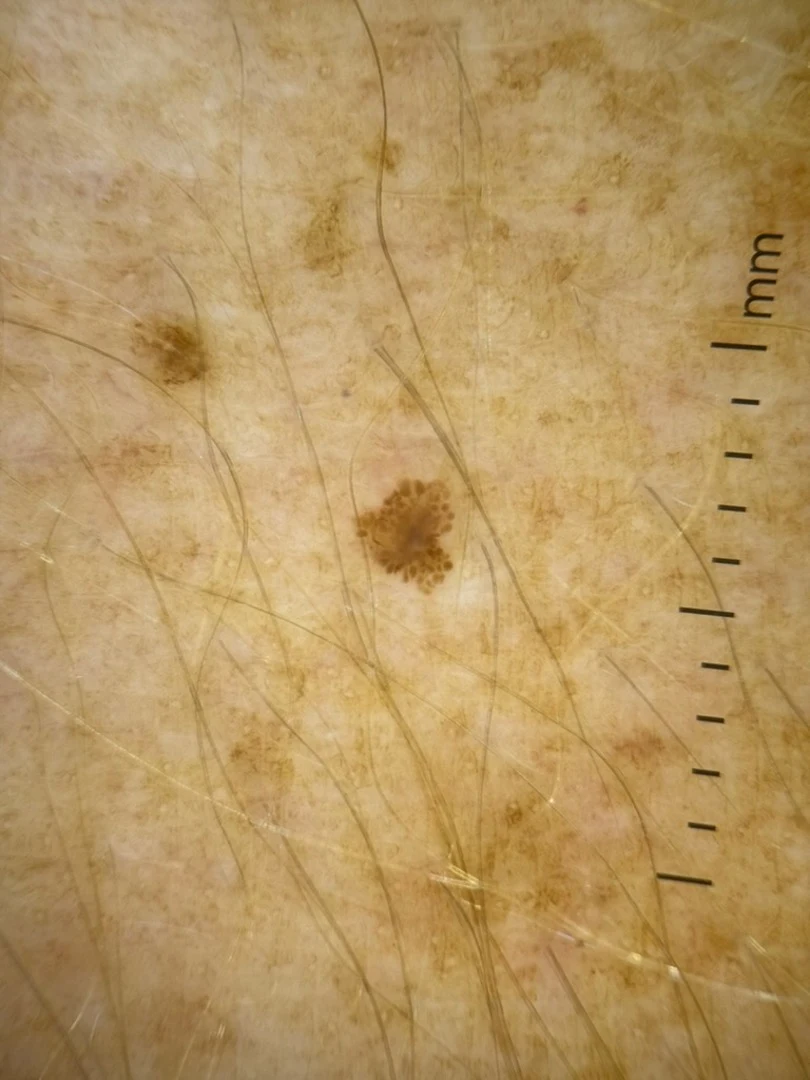
A dermatoscope shows what sits beneath the surface. Knowing what it means is the skill. Four of the patterns he has learned to read, each one in his case films.
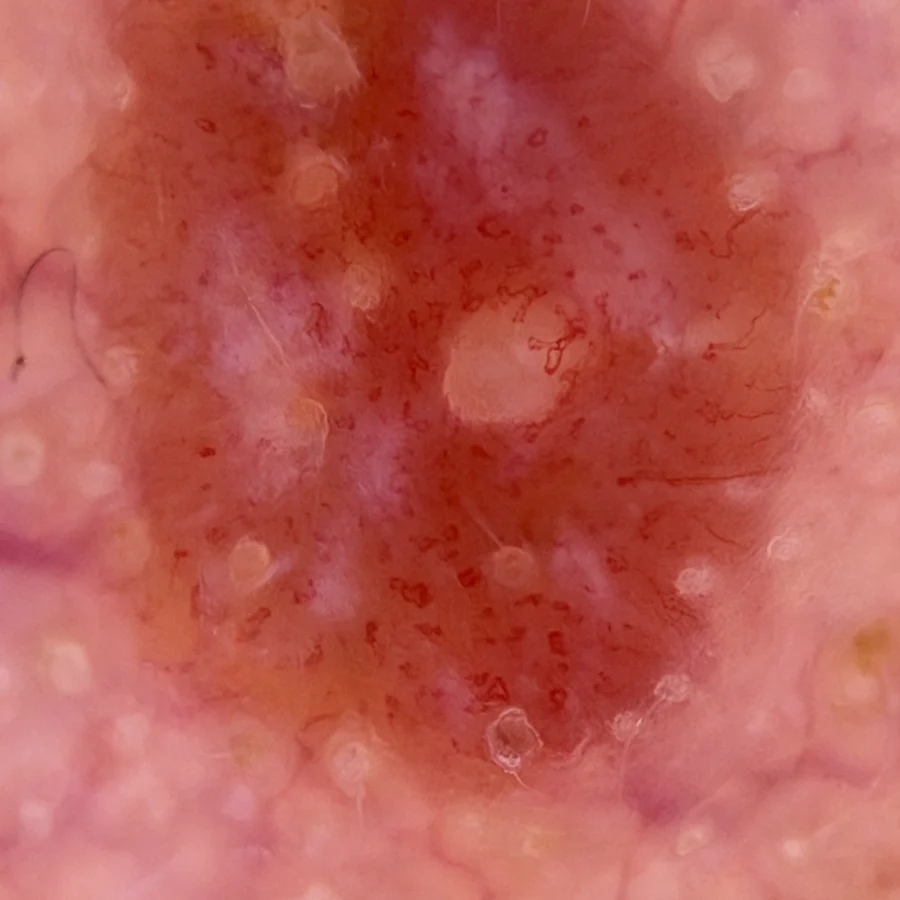
01 · Under the scope
The vessels inside a mole may be the singular clue that a normal-looking mole is melanoma.
Seen in
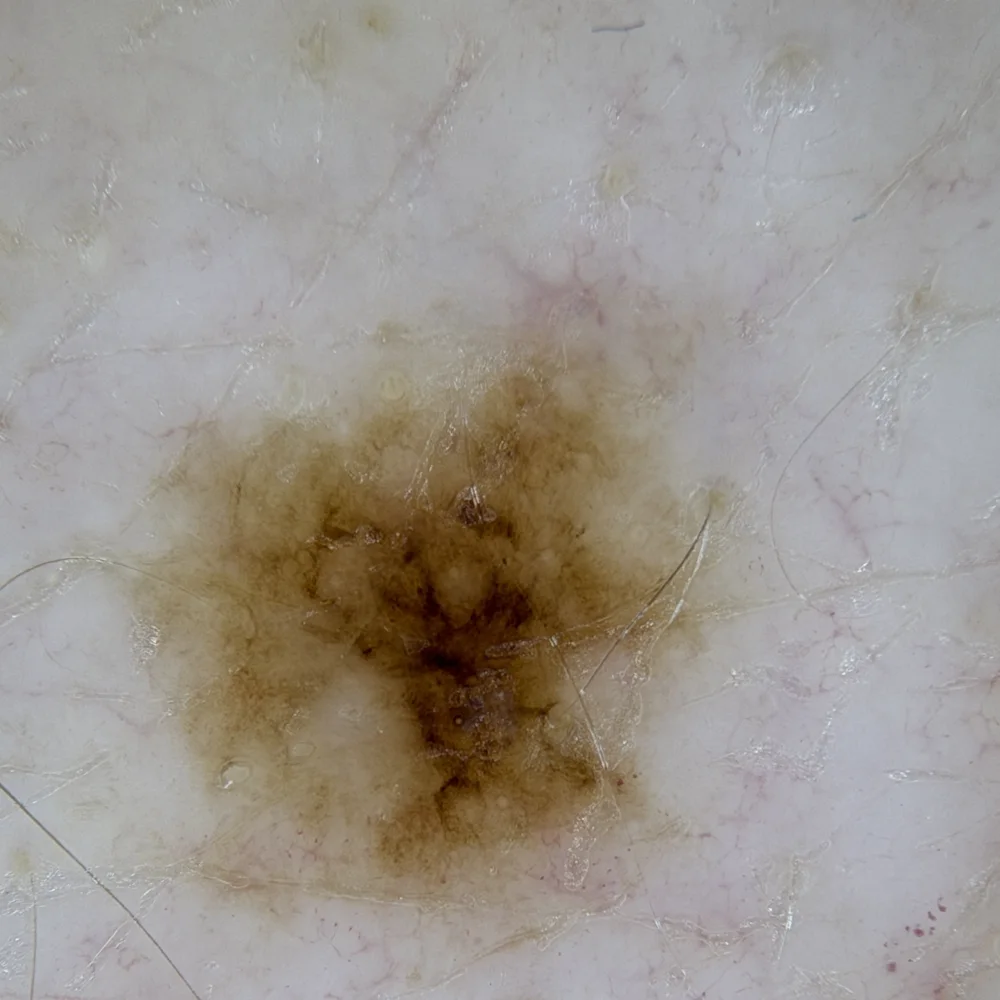
02 · Under the scope
Melanocytes create a pigmented network inside a mole, which becomes visible with dermoscopy. Subtle changes in the network can guide when a mole requires a biopsy.
Seen in
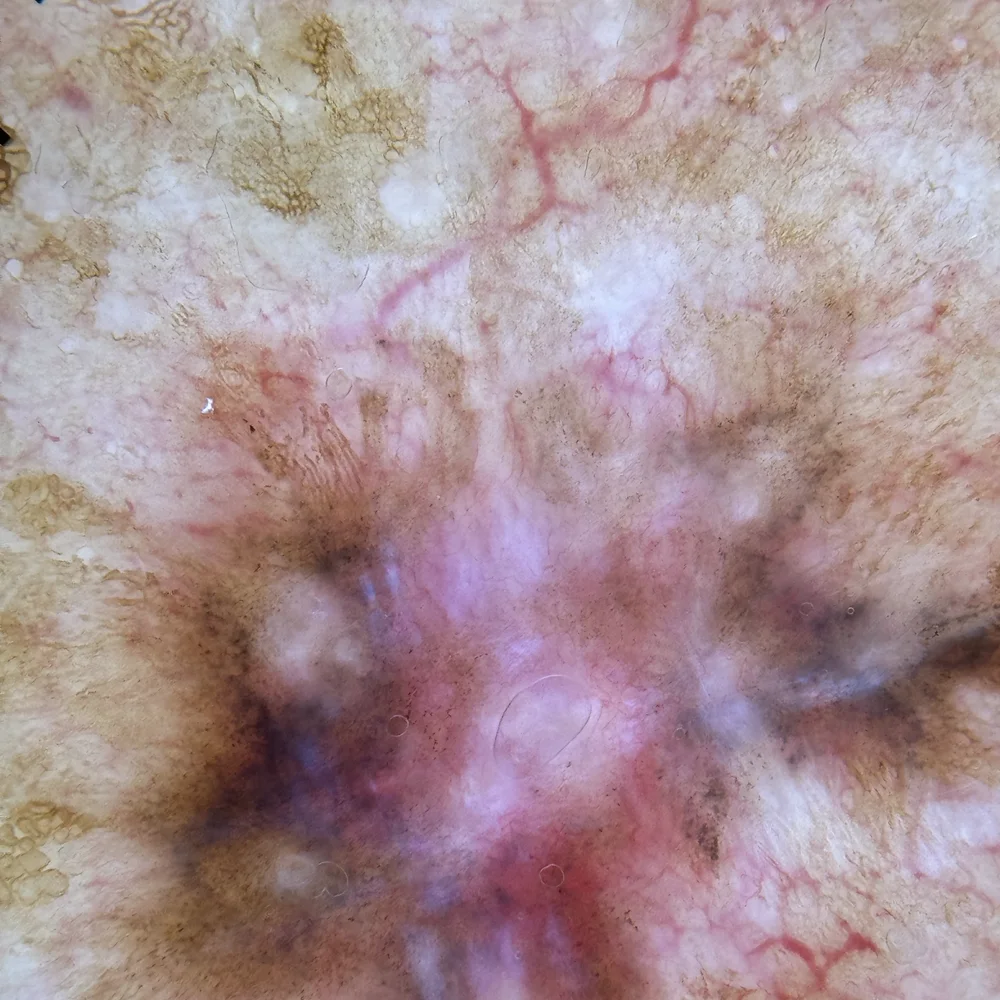
03 · Under the scope
Gray inside a pigmented lesion can suggest a normal appearing sunspot is melanoma. To the naked eye, this finding is easy to miss.
04 · Under the scope
Are common structures in a mole. However, their placement, size, and color can aid in identifying an actively growing mole, or melanoma.
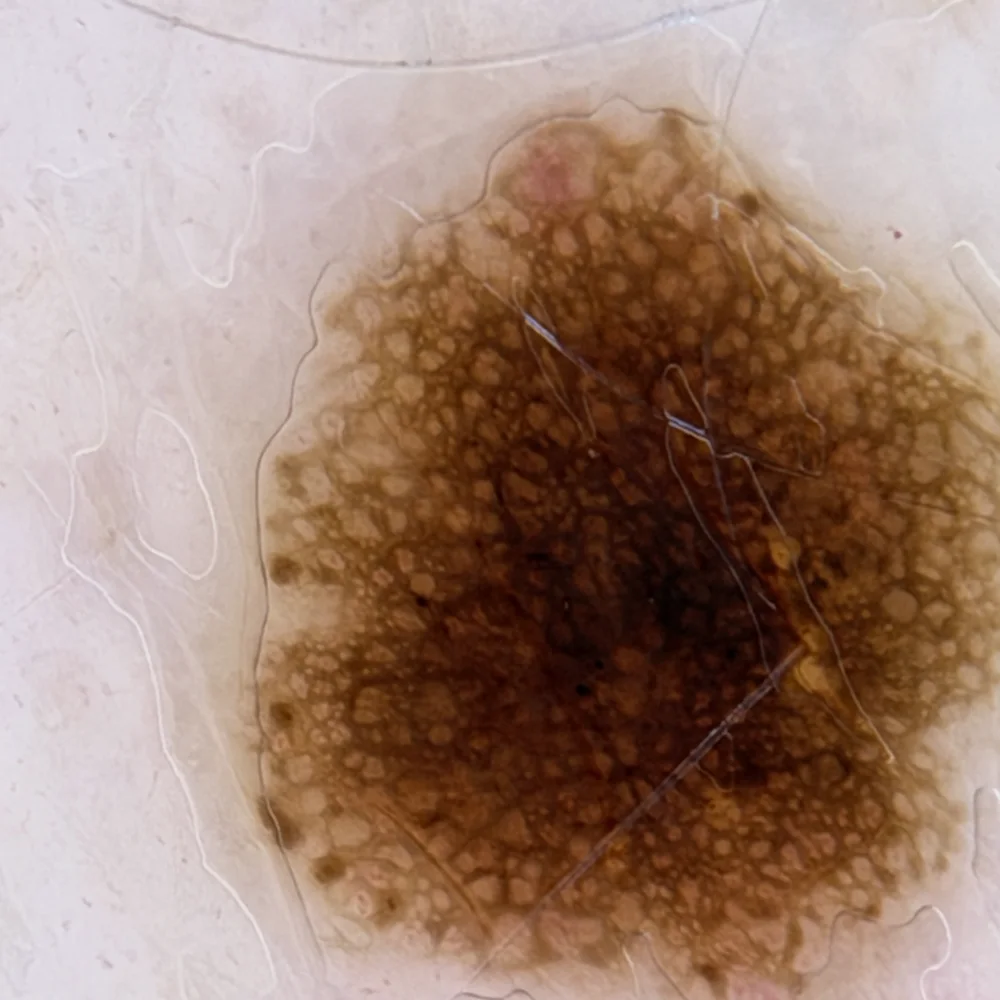
Images from Dr. Christopher’s own dermoscopy library. Illustrative, not diagnostic.
The record
Arizona law requires every melanoma to be reported to the state. These are the state’s own counts, year by year.
Identified by Dr. Christopher · 2023
215
12.8× the state average of 16.8 melanomas per reporting clinician.
Source: Arizona Department of Health Services, Melanoma Reporting in Arizona, No. 2024-1 (June 2024).
34.3Pima County
Home to Tucson and Dr. Christopher’s practice. 2nd of Arizona’s 15 counties that year. Tucson is marked.
Case films
Real lesions from Dr. Christopher’s practice, each one easy to pass over. He narrates what he saw and why it mattered.
Each film has a voice track. Turn the sound on.
His library
Lesions from his own practice that looked ordinary at a glance. He didn’t miss them because he has spent years checking his reading against the pathology, until patterns most people pass over stand out.
In the press
 Los Angeles TimesWhy standard melanoma detection misses the “boring” tumors (opens in a new tab)
 Business InsiderA 21-year-old’s melanoma that looked entirely harmless (opens in a new tab)
 South Florida Sun-SentinelThe handheld device that catches deadly melanoma, and whether your doctor uses one (opens in a new tab)
 Daily MailA freckle on the face that turned out to be cancer, and the test to ask for (opens in a new tab)
 Dermatology TimesOur current gap in melanoma detection, by Dr. Christopher (opens in a new tab)
 Investor’s Business DailymRNA cancer vaccines and what they could mean for melanoma (opens in a new tab)
 The HealthyThe one question to ask your dermatologist at a skin check (opens in a new tab)
 WFLAWhy a routine skin check can miss skin cancer (opens in a new tab)
 PreventionThe subtle sign of skin cancer dermatologists watch for (opens in a new tab)
 HealthSunscreen mistakes that quietly raise your risk (opens in a new tab)
 Everyday HealthThe risks behind viral tanning hacks (opens in a new tab)
 Woman’s WorldPrevention habits dermatologists rely on year-round (opens in a new tab)
 EatingWellSunscreen first, and the foods that may help skin too (opens in a new tab)
 The ChalkboardQuestions that help catch melanoma earlier (opens in a new tab)
 Super AgeWhat your skin may be trying to tell you (opens in a new tab)
 Authority MagazineFive things everyone should know about cancer (opens in a new tab)
Listen
Long-form interviews for clinicians, and for anyone who wants to understand their own skin exam.
 Podcast
Dermasphere
For clinicians: the case for a dermatoscope on every lesion.
Listen (opens in a new tab)
 YouTube
Sarah Ann Macklin
Sun, screening and what a proper skin exam involves.
Listen (opens in a new tab)
 YouTube
Dave Asprey
Early detection for listeners who track their health closely.
Listen (opens in a new tab)
 YouTube
Dustin Portella
Dermatologist to dermatologist, in plain language.
Listen (opens in a new tab)
 Spotify
Dylan Gemelli
How a skin check works, and how melanoma slips past one.
Listen (opens in a new tab)
 Spotify
Biohacking Blondes
Sun, skin and screening from first principles.
Listen (opens in a new tab)
A new standard for longitudinal skin cancer detection.
A revolutionary melanoma surveillance program that combines longitudinal full-body digital photography, AI-assisted detection, and advanced imaging technologies paired with the melanoma detection expertise of Michael Christopher, MD.
The program is not currently open for enrollment. Please submit your information, and our team will notify you when enrollment becomes available.


